







First Fully Synthetic Cell Wows Biologists
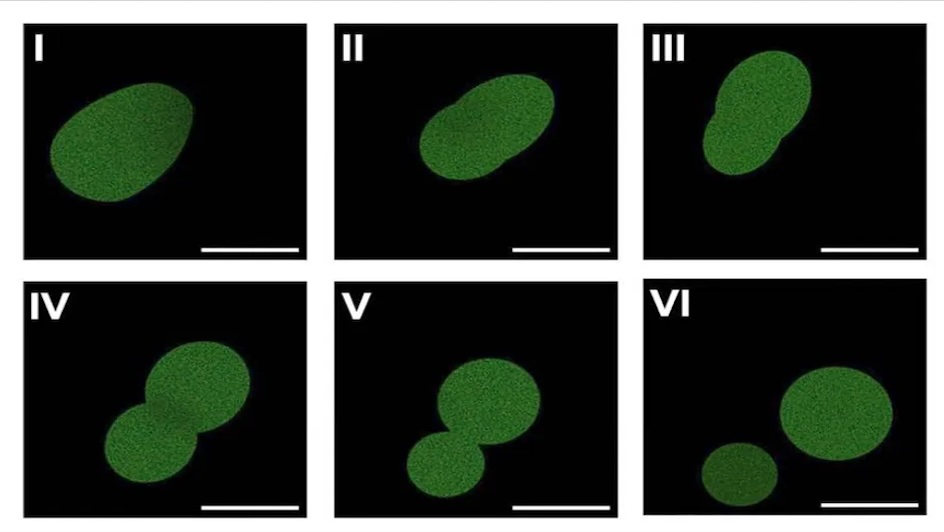
In an incredible breakthrough for biotechnology, scientists have developed “SpudCell”, the world’s first synthetic cell with a complete life cycle built entirely from non-living chemical components.
As University of Minnesota Twin Cities researcher Kate Adamala described it: “We’ve built a cell that looks very similar to a natural cell: it has a membrane, it has the DNA inside it, and it has the cytoplasm. It behaves very much like you would expect a natural cell to behave. The difference is that ours is fully chemically defined. And that means I have a blueprint of it. I have a full ingredient list.”
Through clever engineering, the synthetic cell can acquire resources via feeding, grow and replicate its DNA. To achieve cell division without a natural cytoskeleton, it utilises surface proteins that crowd the membrane until mechanical stress forces it to split. The team even demonstrated basic selection, introducing a mutation that allowed variants to outcompete original cells.
However, SpudCell is not yet considered alive. It divides inefficiently, lacks the machinery to create its own protein-making ribosomes, and relies on external mechanical assistance to survive past five generations.
To advance the technology, the researchers co-founded Biotic, an open-source public-benefit institution backed by $10 million in seed money. By sharing this standardised chassis, they hope the global scientific community can eventually engineer synthetic cells for carbon-neutral manufacturing, precise drug synthesis, and eco-friendly material production.
Image Credit: Source