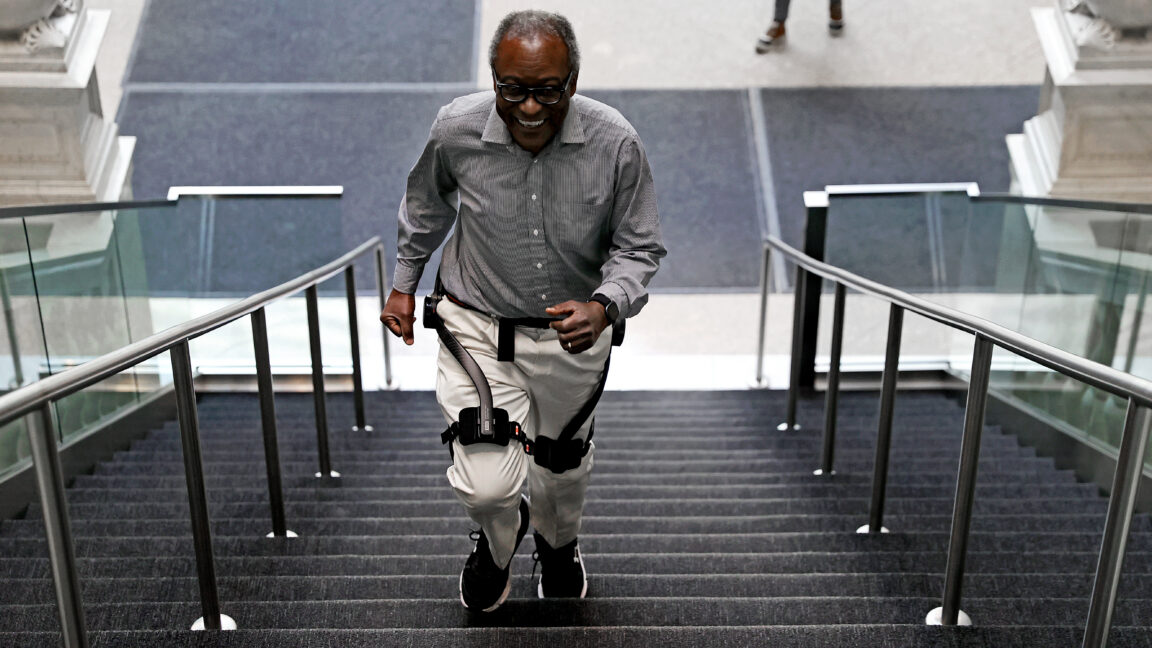








Exoskeletons: From Science-Fiction to Everyday Tool

Human exoskeletons are rapidly transitioning from experimental laboratory technology into essential equipment for rescue teams, heavy industry and military operations. These wearable robotic frames – which are powered by electric actuators, onboard control units, and adaptive sensors – attach to the body to enhance user strength, endurance and posture.
Real-world applications are expanding globally: search-and-rescue teams, such as Seattle Mountain Rescue, are testing lower-body units to improve speed during wilderness searches, while Finnish firefighters utilise them to reduce physical strain.
In industrial settings, major companies including IKEA, Ford, Boeing and Toyota employ exoskeletons to assist workers with material handling and assembly. Additionally, the Ukrainian military deployed lower-body systems in 2026 to help soldiers carry heavy artillery shells on the front lines.
Modern exoskeletons deliver support through power augmentation, assist-as-needed capabilities or full robotic control for physical rehabilitation. The sector, currently valued at approximately $500 million, is projected to double or triple by the mid-2030s.
While engineering challenges remain – particularly regarding battery energy density, device weight and muscle-signal integration – advancements in lightweight materials and humanoid robotics continue to drive innovation, solidifying exoskeletons as practical human augmentation tools.
Image Credit: Source