







Paralysed Patients Speak and Gesture With Revolutionary Brain Implant

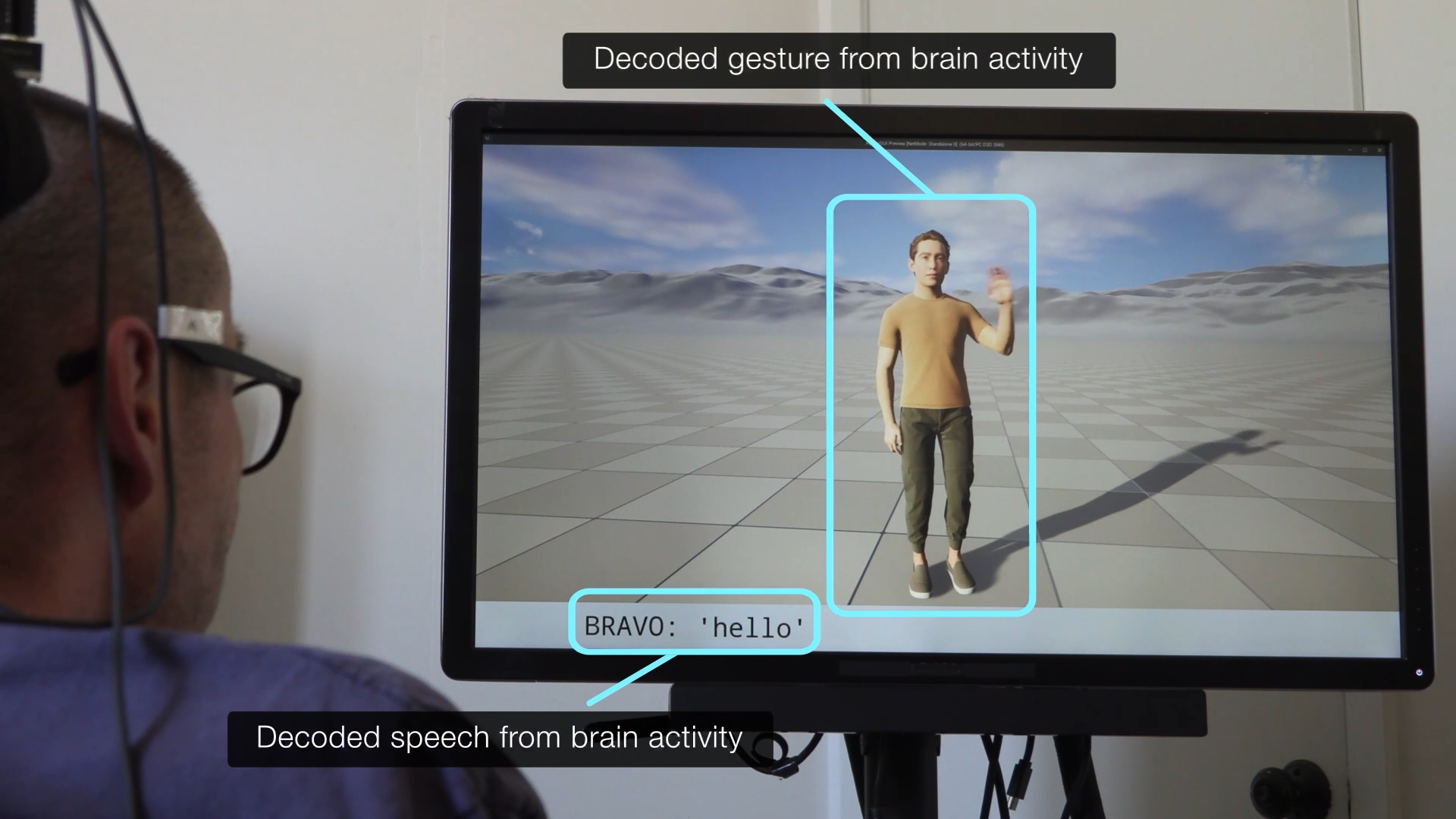
Researchers at the University of California, San Francisco (UCSF) have developed a groundbreaking brain-computer interface (BCI) that enables paralysed patients to speak and gesture simultaneously using a single brain implant.
The study demonstrated the first BCI capable of decoding both speech and communicative body movements in real time. Previous neural implants addressed speech or motor functions in isolation, but natural human interaction relies on a combination of spoken words and non-verbal cues such as nodding, waving or shrugging.
The team – led by neurosurgeon Dr. Edward Chang – implanted an electrocorticography electrode array over the sensorimotor cortex of participants severely paralysed by stroke or amyotrophic lateral sclerosis. Using machine learning models, the system translated neural activity into commands that drove a personalised, full-body digital avatar.
When participants attempted to communicate, the decoders processed words and gestures in parallel – displaying speech as text while the avatar performed corresponding physical actions. One participant achieved up to 100% median accuracy across conversational assessments.
Researchers noted that training the decoders on simultaneous speech and gestures yielded significantly higher accuracy than treating the actions independently.
“Conversation is about much more than the words being spoken. It’s a multilayered, dynamic process involving the whole motor cortex. This proof-of-concept shows us it’s possible for a BCI to restore some of this freedom and flexibility,” Dr. Chang explained in a statement released by the UCSF team on Monday, 14 September.
While still an early prototype limited to a constrained vocabulary and set of movements, this multi-effector technology represents a major step toward restoring flexible, expressive communication for individuals with severe vocal-tract and body paralysis. Scientists plan to expand testing to larger datasets before clinical deployment.
Image Credit: Source