






Mind-Bending Coincidences That Defy Logic Part 2
There is a word for moments when the universe seems to wink at us: synchronicity. Coined by psychologist Carl Jung, it describes meaningful coincidences that feel too precise, too perfectly timed, to be mere accident. Scientists will tell you that with billions of people living billions of moments, unlikely overlaps are statistically inevitable. But try telling that to the woman who survived three shipwrecks, or the twins who lived the same life without ever meeting. Some coincidences don’t just stretch probability: they obliterate it.
Here are two more incredible coincidences:
The Jim Twins: One Life, Lived Twice
In 1940, identical twin boys were separated at birth and adopted by two different families in Ohio. Neither family knew the other. Neither boy knew he had a twin brother. They would not meet for 39 years.
When Jim Lewis and Jim Springer were finally reunited at age 39, they discovered they had both been named Jim by their adoptive parents. That alone might be explained away as coincidence. But the similarities kept coming.
Both had loved mathematics and carpentry, and both had pursued careers in law enforcement. Each had married a woman named Linda, divorced, and then remarried a woman named Betty. Each had a son: one named James Alan, the other James Allan. Both owned dogs named Toy.
They drove the same model of car, smoked the same brand of cigarettes, and had independently taken their family holidays to the same beach in Florida.
Psychologists at the University of Minnesota, who studied the pair as part of a landmark twins research project, were astonished. Their case became a cornerstone of the nature versus nurture debate, suggesting that genetics may exert a far more powerful influence over the choices we believe we make freely than anyone had previously imagined.
Two men, raised in entirely different homes by entirely different families, had, independently and unknowingly, constructed the same life.
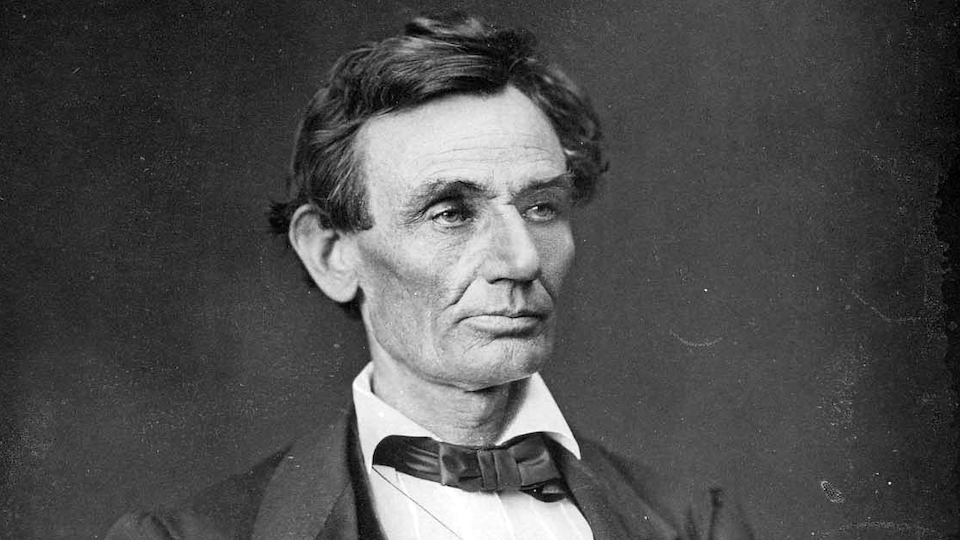
Lincoln and Kennedy: History’s Most Famous Parallel
The similarities between the assassinations of Abraham Lincoln and John F. Kennedy have fascinated historians and conspiracy theorists alike for decades. Some of the most commonly repeated claims turn out to be embellishments or outright errors. But enough of the verified parallels remain to raise the hairs on the back of your neck.
Lincoln and Kennedy were elected first to Congress and then to the presidency exactly a century apart: Lincoln in 1846 and 1860, Kennedy in 1946 and 1960. Both were shot in the head on a Friday, in the presence of their wives.
Both were succeeded by vice presidents named Johnson: Andrew Johnson, who succeeded Lincoln, and Lyndon Johnson, who succeeded Kennedy, both of whom were born in years ending in ’08.
Both assassins, John Wilkes Booth and Lee Harvey Oswald, were known by three names, and each name contained exactly 15 letters. Both assassins were killed before they could be brought to trial. Lincoln was shot in Ford’s Theatre; Kennedy was shot while riding in a Lincoln Continental made by Ford.
And then there is perhaps the strangest footnote of all, one that predates the assassination entirely. In 1864, Robert Todd Lincoln, the president’s son, tumbled off a train platform and was rescued by a man who grabbed him and pulled him to safety. His rescuer was Edwin Booth, the famous actor and the brother of John Wilkes Booth: the man who, months later, would assassinate his father.