








Palm Tree Waste: From Hazard to Bio-Energy
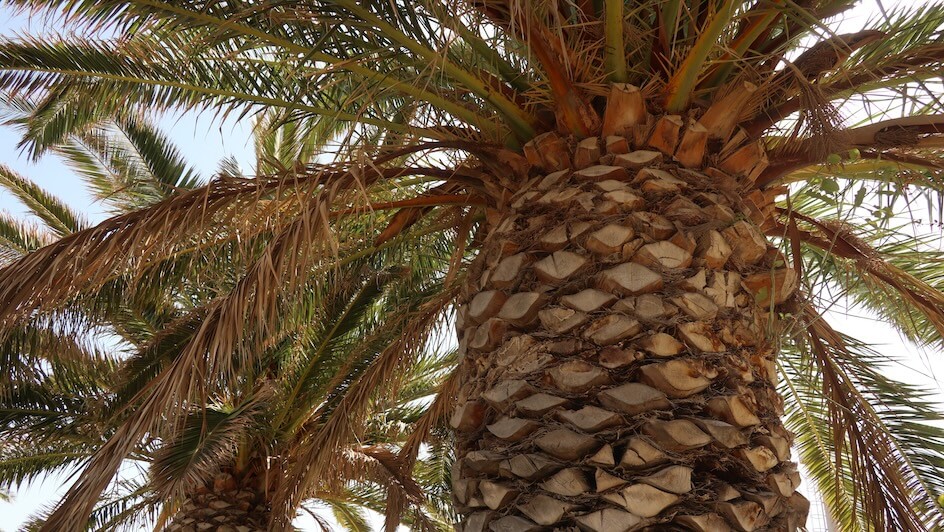
An international research coalition led by the University of Sharjah (UOS) in the United Arab Emirates has identified a sustainable method to convert date palm surface fibres (DPSFs) into high-value bio-oil.
With an estimated 150 million date palm trees around the globe – each shedding roughly 20 kilograms of biomass annually – this breakthrough could transform nearly three billion kilograms of agricultural waste into renewable energy.
Traditionally, farmers have disposed of these DPSFs through open-field burning, a practice that chokes the air with carbon dioxide and nitric oxides.
The UOS researchers utilised pyrolysis, a thermochemical process that heats the DPSFs in the absence of oxygen, to extract a liquid rich in hydrocarbons. Qualitative analysis revealed the resulting bio-oil is composed of 42.28% aliphatics and 38.68% aromatics, making it an ideal candidate for industrial fuel production and the recovery of valuable phenolic compounds.
Due to the plant fibres’ tough lignin and cellulose, the team employed advanced kinetic modelling to optimise the energy required to break these components down. As palm trees absorb carbon dioxide during their growth cycle, this energy cycle is potentially carbon-neutral.
While the science is proven, the authors mentioned that global scaling depends on optimising logistics and nitrogen consumption. By replacing hazardous incineration with a circular permaculture approach, the Middle East could soon turn a dusty environmental liability into a future cornerstone of the sustainable energy economy.